Monday, March 30, 2009

Dead Dog Tired

The back covers for Thom Pain and The Flu Season have excerpts from the New York Times labeling Will Eno as “a Samuel Beckett for the Jon Stewart generation.” Having delved into Beckett last semester—to the point where I can no longer escape the man—I was intrigued. However, I was also worried that by reading this my judgment of Eno would become predetermined. It was my fear that I would force Beckettian images and motifs onto Eno, instead of just letting them come out naturally. If they were there at all.


I first started with Thom Pain. Within the first couple of pages my Beckett radar was going off, but I could tell it was being forced. It started with similarities to Krapp’s Last Tape. The opening of Thom Pain finds Thom going through a dictionary. I was immediately reminded of Krapp looking through the dictionary in order to understand a word his younger self used. However, the scenes were not the same. Thom’s dictionary use is to illustrate the absurdity of words. Thom’s definition of fear is comical, and noticeably lacking in definition. So, I forgot about Krapp; I figured it was all in my head. Then I came across a long section of text that struck me as being Beckettian without me forcing it to be.


“I like the weather. It was nice out, sort of raining. I thought about the world. I liked looking in the dark windows. I just let everything come. Stopped thinking. Let the words run. They came and went, disappeared. Like the things the stood for. I miss her so much. I do, I do. Help me, bees, help. I’m going somewhere else now. My face was so swollen I lay in a meadow, behind her. I felt spasms. Our last. I like violins. I should have tried more. White markings above the paw. Her pretty ankles, dresses she wore. I lay there. I lay everywhere. Always looking up. She stopped to scratch. She quivered. You only have one day. I couldn’t make the matches work. I scratched behind her ear, kissed her lips, her neck. The nest was full of bees. She said I love you. I heard buzzing. My eyes were closed, the sun being bright. I said I love you. And I didn’t want to see. I walked around. I left home. Christmas carols played, I could smell my insides. I lay there. Weeping mother, waving father. I sniffed butterflies. I pissed on things. My poor face. I ate scraps. Wanted to be a cowboy. Had food poisoning. He said to me, ‘Sarah? Mary?’ I didn’t say anything. I thought I’d get dragged up on stage. I take things out on others. Who am I, now, and what difference does it make? I took her on walks. We ran through nature. We barked at cars. He put his mouth on me, and I, a lady, put my leg around his neck. I cut my hair half-off. He hurt me. She hurt me. I bled in the night. I hurt her. I wasn’t anywhere. That I was in love. Now I’m he” (36).


This passage reminded me not just of the whole premise of Krapp’s Last Tape, but of the ending scene in which Krapp plays his recorded memory of his last trip with his love. He is in that moment, but he is it a constant state of flux as well. He cannot seem to hold any one memory together. Thom is in the same situation. What are Beckett and Eno trying to say with this tessellated text? It seems, sticking with Eno, that he is trying to comment on our memories and our relation to them. Do events dictate the importance of a memory? Or, does the memory itself give rise to its own importance. In the above scene several memories are fused together, no one memory stands out as more important than the other. Something as seemingly profound and deep as his love for a woman is intermingled with his attack by bees and his inability to light a match. Essentially, they are all the same. They are all built into the mosaic that is Thom Pain. Thom, like the young Krapp, tries to order his memories based on importance. Yet, by the end of each play, what the character thought was important, turns out to be some menial event giving way to something greater. In both cases, neither character is able to sustain any one memory, and so they all exist on equal footing. Perhaps this the truest representation of memory. Too often we find ourselves ranking and filing our memories. Adding more importance to one and demoting others in the process. Perhaps Eno is indicating that we cannot truly do that, we are assembled by all those events. We are an amalgamation of everything that has ever occurred in our lives, whether we took it into account or not is irrelevant.


The Beckett motif continues throughout Eno’s work, but I think I’ve exhausted it for now. Now, let’s turn to the other side of the New York Times’ assertion that Eno is “a Samuel Beckett for the Jon Stewart generation.” How is Eno like Jon Stewart; or, what exactly is Eno doing that speaks to what is crudely described as a Jon Stewart generation? The obvious answer, and frankly the New York Times should try harder, is in the play Tragedy: A Tragedy. This play drips with the Jon Stewart critique of news outlets. It’s almost redundant to explore the similarities. Instead, let me focus on what Eno is doing that Jon Stewart does not. In this play, Eno is not merely poking fun at media, but rather, his is unraveling the very structure of modern communication. Where Stewart cracks jokes about Wolf Blitzer, or the always easy target of Jim Cramer, Eno shows us the foundations of our communication in ruins. For Eno, there is nothing funny about the state of televised news. We laugh at this play because the characters are absurd and because Jon Stewart has trained us to do so, but it in fact is a tragedy. Eno seems to be trying to remind us of this from the very onset of the play.


Tragedy: A Tragedy is filled with examples of our addiction to news, and our inability to allow anything to just be. As Frank in the Studio would say, “Well, certainly, perhaps, one look—if we’re looking hard enough—almost says it all” (82). Not only is this a critique of the news mentality, but it also is a critique on my approach to Eno’s work. If I was looking hard enough, of course I would infer Beckettian motifs from simple phrases and scenes. If you look hard enough at anything you will find meaning. That is what academia is structured around.
So, what about the similarities and images that spoke to me without me looking too hard? Again turning to Thom Pain, I found his adventures with bees to be hilarious and very familiar. At first, I couldn’t recall why the bee exploit was hilarious, then it hit me, it was reminding me of comics by Jamie Smart and Jhonen Vasquez (sorry if you read this Jamie, I know you are tired of being compared to Vasquez. Take it up with Paul Banks). Smart has several little comic strips centered around bee attacks, all of which are violent, and all of which are hilarious. Vasquez’s cartoon Invader Zim utilized bees in a similar fashion.


I think above all the comparisons that are being laid on Eno, it is important to take stock of his uniqueness. Eno, in the three plays we’ve read, has created his own motif. He has created his own style. You know it’s an Eno play if it involves dead dogs, dictionaries, communication errors, and unsteady memories. Eno hasn’t been around for a very long time, so I find it very impressive that he has been able to carve that much of a niche for himself in such a short period of time. Of course, it’s completely possible that Eno is a one-trick pony and can only write about dead dogs and failed dictionaries, but I like to think otherwise.

Sunday, March 29, 2009

The Music of Sound

I went through a process with John Cage. First, there was “Lecture on Nothing” and the proceeding vignettes. This was enjoyable, almost comprehendible, but most assuredly amusing. Then came “Lecture on Something”. This was less enjoyable, still almost comprehendible, but the amusement was beginning to wane. Finally, there came the John Cage performances. Louis Goldstein’s performances of 4’33” and Sonatas and Interludes shed new light on John Cage. This new light was not a favorable one, neither to Goldstein or Cage.

John Cage’s writings are good, they are amusing. Up until the live performances, I felt the same way about Cage’s music. I got a CD from the library called 3 Compositions by John Cage. I popped this into my computer at work and gave it a whirl. The sounds and tones were interesting and I began to see how Cage was changing the musical layout of the world. I also began to see Cage’s influence on modern music. The documentary we watched in class helped to further my interest and my ability to see Cage’s influence on modern music. This said I was looking forward to Louis Goldstein’s performances of Cage’s work. I thought surely seeing it performed live would only add to my appreciation for Cage. It is safe to say that I thought wrong.

I understand that Goldstein was sick when he visiting our campus, and I also understand that we as an audience were not the most civil. All that said, the performances were lackluster and led me to a new understanding of Cage’s music. First, a brief attempt at a review of the evening. I am recalling this nearly a month—or longer—from the events, for whatever that is worth. I entered into a tiny recital room, a room that should have amplified the ambiance of the performance, to find no available chairs. Instead, I was greeted with the hard stairs that led to a slightly elevated area of the room. The atmosphere attempted to stay true to the Cage tradition, as we all sat in a tight circle around the performer. There was no stage; rather we were all clustered together in the hopes of experiencing something, or nothing if we were so inclined. After a long wait whilst lighting issues were sorted, the performance began. I cannot say what this wait, in which I found myself seated even longer on the hard floor, did to my experience of the performance. If it influenced it at all, it was probably in the negative. Goldstein introduced himself and launched into 4’33”. The shock of this performance was unavailable. Everyone in the room, save for two girls seated next to me, knew what to expect. This expectation, I feel, led to an unnatural silence. The point—if we can find one—of 4’33” is to illustrate that the music of a performance is not just in the performer, but rather in the audience as well. We as an audience were all too aware, and all too self-conscious to participate in the performance.

When 4’33” ended, we applauded. I don’t know if we were applauding for Goldstein, who took the pains of keeping time, or if we were applauding ourselves in a vain show that we had just created nothing. Either way, we moved on. Before Goldstein began playing Sonatas and Interludes he invited people to lie underneath the piano. This, he said, would add to the performance. I would later find out that he was correct. After several people leaped to the floor, and to the feet of Goldstein, the performance began. The music, I admit, was well played. There was nothing wrong with Goldstein’s technical mastery of Cage’s work. There was, however, much wrong with the setting. A combination of the audience’s inability to quiet themselves for more than five minutes, and Goldstein’s apparent temper, led to a caustic evening. The performance did allow me to see Cage’s work differently. That night I found myself less impressed with John Cage. I admit and concede that he is the most influential composer in modern times; however, I also recognize that we are deeply embedded in modern times. Because of this, because of our over-modernization, I think we have moved beyond John Cage.
As I’ve stated several times, I found Cage’s influence on modern music. I don’t mean modern music in the sense of modern composers, because speaking honestly, who cares or listens to modern composers? John Cage was lucky to come along at a time when he was not completely irrelevant. Though, he was cutting it pretty close. No, I can see Cage’s influence on modern popular music. The musical act that I see Cage reflected in the most would be Nine Inch Nails. As I listen to Cage’s works, and see how he altered the piano and altered what we considered to be music, I cannot help but think of Trent Reznor and his band Nine Inch Nails. Nine Inch Nails pioneered the industrial rock movement, which is/was a movement in rock music that saw the use of non-traditional instruments and sounds. Throughout Reznor’s albums he has always pushed and changed the concept of what is noise and what is music. It is in his instrumental pieces, however, that Cage’s influence is most found. On just about every Nine Inch Nails’ album are one or two instrumental pieces. These pieces feature the use of pianos, drums, and electronics. The piano pieces are Reznor’s bread and butter, and though I have no evidence in this claim, I am sure that Reznor finds himself using a prepared piano for many of his recordings. Even when Reznor is using a synthesizer, it is clear that this instrument and Reznor’s use of it owes heavily to Cage.

There is one Nine Inch Nails album that fully embodies Cage’s musical styles. It is one of Reznor’s latest called Ghosts I-IV. This album, which was released digitally through NIN’s website, is completely instrumental. The piano pieces on this album hark back to Cage’s prepared piano. Reznor’s use of noise and other non-traditional outlets on this album also find their birth with Cage’s experimental music. So, regardless of how I may feel about John Cage’s music, I am still aware of his lasting influence and his importance to music. However, with music like NIN and other progressive bands so ubiquitous and common in today’s world, it is easy to overlook Cage. It is easier still for today’s generation to find Cage’s music to be almost too traditional. Cage represented more of a bridge, he was the figure needed to allow other musicians to fully change the concept and appreciation of music.

Videos


Sunday, March 22, 2009

Policy of Truth

There are many pitfalls to working theory into a play: the play could be too subtle and lose its intended message, or the play could be too heavy handed and lose its audience. Either way, a dramatist runs the risk of compromising the entertainment value of his work in order to pursue his artistic and theoretical values. Luigi Pirandello’s Six Characters in Search of an Author is an anomaly. It is a play dripping with theory, yet it remains entertaining despite, or because of, this fact. Pirandello creates a play that violently moves theater and theory in a new direction. In 1921, when the world was just being introduced to Modernism, Pirandello experiments with Post-Modernism and Deconstruction. The major theme being explored throughout Six Characters is the nature of truth and representation in art. In other words, Six Characters asks the question, what makes a character, and what makes person? The answer that it offers up is that the two are not mutually exclusive.


Six Characters predates Baudrillard’s definition of the simulacrum, yet putting aside this anachronistic disparity, we find that Six Characters is a prime example of Baudrillard’s theory. Within Pirandello’s play he blurs the line between reality and representation. Pirandello has Characters confronting characters, or to put it another way, Characters confronting reality as portrayed by actors. Baudrillard’s theory states that, “Representation starts from the principle that the sign and the real are equivalent…” (Baudrillard, 166-184), so by this logic, Pirandello’s Characters (signs) and living people (real) are one and the same.


Pirandello asserts that Characters are more real than the people they represent. In Act Two, the Father confronts the Director on the advantages of being a fixed character as opposed to being a living person, “[a] character truly has a life of his own, marked by his own characteristics, because of which he is always ‘someone’. On the other hand…a man in general, can be ‘nobody’” (55). Returning to Baudrillard’s definition of a simulacrum, we find that a character is capable of becoming more real than that which it represents. For Pirandello’s Characters, the path to becoming more real than their models forces them to confront the nature of truth in life and art.

The Characters maintain that their truth must be heard, yet their truth is fiction. It is here that Pirandello exerts most of his theoretical energy. Each Character asserts that their story is in fact their truth, more so than that of the other characters. This is because the Characters represent and embody living people. By representing a living person, and by being fixed to a series of events, the Characters become “living people more alive than those who breathe and wear clothes: less real, perhaps, but more true!” (12).

According to Six Characters, the truth being represented by characters is contingent upon immortality. In order for characters to “live eternally…they [must have] the good fortune to find a fertile matrix, a fantasy that [knows] how to raise and nourish them” (14). In this way, the fertile matrix, the author, creates a character that represents reality. Once that character is created, it embodies the multitude and complexities found in living people, but it embodies them all at once. A living person comes and goes through these multitudes and complexities of emotions, never permanently settling into one; the character does not exist in flux, it is static. Truth, it would seem, is in permanence.

Pirandello’s theory runs deeper than the truth of a character; it also tackles the truth of acting. Again we return to the simulacrum as described by Baudrillard. The simulacrum is not the instant reflection of life, but rather a result of that reflection becoming so distorted and perverted that it becomes its own reality. The acting of a character is the representation of represented life. As the Director explains to the Father, “you cannot exist as your real self! Here it is the actor that represents you” (36). A character represents truth, an actor represents a character, and so it becomes that an actor is truth. This happens because an actor “[gives] body and form, voice and gesture” (35), to a character, bringing that character to life. Six Characters is a heavy-handed and convoluted play. It puts forth more theory than plot, and more philosophy than story. Yet, it remains entertaining and engaging. Six Characters seeks to unnerve its audience and have them question the very base of their reality. This, for the most part, is done in a playful manner. Existence and consequentiality are not thrown askew; rather it is our definitions of the difference between real and fiction that is questioned. Ultimately, Pirandello argues that art creates reality, because art is the representation of reality.

Baudrillard, Jean. Jean Baudrillard, Selected Writings. ed. Mark Poster. Stanford; Stanford University Press, 1988, pp.166-184. http://www.stanford.edu/dept/HPS/Baudrillard/Baudrillard_Simulacra.html

Sunday, February 1, 2009

The Seagull is no Albatross

The Seagull is a modern dramatic masterpiece that changes the dynamic and landscape of theater. Anton Chekhov’s work is one of subtlety, yet one that speaks volumes about traditional theater. When I first thought about this play, when I first started reading it, I thought that Chekhov was the precursor to Larry David. This clearly had to be the first “show about nothing.” I quickly realized that that line of thought would get me nowhere. So, I moved on and thought about my expectations and prejudices going into the play. I’ve read a few Chekhov stories prior, along with Dostoevsky, Tolstoy, and even modern Russian greats like Nabokov. As much as I enjoy Dostoevsky and Nabokov, I can say that my overall expectation and notion of Russian literature is that it is immensely self-referential and ethnocentric. Yet, Chekhov tries to counter my bias by instantly and multiply referring to Hamlet. It isn’t until deep into the play that Chekhov mentions the giant shadow in which he is working: “Yes, it’s charming, it’s clever…Charming, but nowhere near Tolstoy” (31). However, this reference to Tolstoy is not used by Chekhov to be self-referential or ethnocentric, but to illustrate the oppressive nature of Russian literature. Chekhov is seemingly using the character of Trigorin to voice his displeasure in Russian literary critique and representation.

So, Chekhov has already broken away from the Russian shadow of the Russian Golden Age, now what exactly am I to make of The Seagull? Chekhov takes away the main method of interpretation so that his play must stand on its own. It’s at this point that I began to notice the “forced” symbolism being implemented throughout the play. On its surface, this is a play that focuses on the inter-relations of a dysfunctional, but all too normal, family. The play deals with the misfiring of communication and love. Yet, through all of this, Chekhov sprinkles symbols and metaphors into the play. These symbols, however, don’t move the plot or the play. Above all else, these symbols don’t move the characters. I feel like The Seagull is a play of false symbolism. By this I mean that Chekhov invokes the mood and structure of symbolism in a tongue-in-cheek manner. The symbols that Chekhov uses either don’t refer back to anything, or are superficial and spelled out for the viewer/reader.

First, The Seagull utilizes Hamlet throughout the play. For the most part, when references are made to Hamlet Chekhov makes it known, there is no need for the viewer/reader to have a copy of Shakespeare with them, nor is there need to possess prior knowledge of the play. For traditional theater, when the dramatist makes reference to a prior play or work of art, it’s either subtle, or used to add depth and foreshadow some event. The Seagull is different. In fact, Chekov uses Hamlet to build or provoke the viewer/reader into speculation about the play’s end. This proves to be unfruitful. Chekov wastes no time in invoking the Hamlet references:

Arkadina. “’O Hamlet, speak no more:
Thou turn’st mine eyes into my very soul;
And there I see such black and grained spots
As will not leave their tinct.”’

Konstantin. “’Nay, but to live
In the rank sweat of an enseamed bed
Stew’d in corruption, honeying and making love
Over the nasty sty…”” (10).

This scene causes the reader to acknowledge to similarities between Konstantin and Hamlet in terms of their dissatisfaction with their mothers’ relationships. Once this reference to Hamlet is set in motion, the reader begins to notice not the obvious references, but the more subtle ones as well. For instance, in act two, Arkadina is talking to Nina and Masha when she says, “I am troubled in my soul. Can anyone tell me what the matter is with my son?” To which Masha replies, “He’s sick at heart. Please—read a bit of his play!” (22) When reading this with Hamlet in one’s mind, it is easy to draw parallels to Hamlet’s mother and Ophelia.

Later, Konstantin, whom the reader now views as a Hamlet-esque character, remarks on the appearance of Trigorin, “Here comes the man with the real talent, entering like Hamlet, even down to the book. (Mimics him.) ‘Words, words, words…’” (28) Now, the reader is left to wonder how the man that is sleeping with Konstantin’s mother, the man that causes strife between Konstantin and his mother, can take the role of Hamlet. At this point, the Hamlet motif begins to unravel. The final Hamlet reference is again inferred by the reader. Chekhov has built his play around Hamlet and though the roles of the characters are in flux, the reader is still seeking the images; at the start of Act Three Trigorin remarks that Konstantin has challenged him to a duel (35). Again, Trigorin takes the role of Hamlet’s uncle, and Konstantin is again Hamlet. By the end of the play, when nothing changes and only Konstantin has died, the reader can see that Chekhov is using Shakespeare to remark on theater’s conventional methods. The Seagull talks much about new forms confronting the traditional theater, and Chekov illustrates this with the most known and classic of theater.

Aside from Chekov’s manipulation of Shakespeare, he also uses symbolism to distract and ultimately change the understanding of the play. Again, this technique is used to illustrate Chekhov’s attempt to change theater. The key element in this false symbolism is the seagull itself. Chekov is using the seagull to mock the reader’s expectation for symbolism and meaning. The seagull first appears in Act Two when Konstantin has killed it and lays it at Nina’s feet. Nina responds to this by saying, “what does that signify?” (27) When she gets no satisfactory response from Konstantin she again seeks the seagull’s meaning, “You put things obliquely all the time, in some kind of symbols. This seagull, too—this is obviously a symbol of something, but I’m sorry, I don’t know what it means” (27).

Nina, like the reader, is demanding and inferring that the seagull be a symbol. Chekhov, however, denies this demand. He instead continues to frustrate and mock theater’s use of symbolism. Perhaps the best example of Chekov mocking symbolism and convention is the scene in which Trigorin and Nina are discussing writing and fame. Chekov uses Trigorin as an embodiment of conventional writers, and thus Trigorin says, “Nothing. Just jotting something down…An idea came into my head…(Hides the book.) An idea for a short story. A girl like you, living beside a lake since she was a child. She loves the lake the way a seagull might---she’s as happy and free as a seagull. But one day by chance a man comes along and sees her. And quite idly he destroys her, like this seagull” (33). Here, Trigorin has summed up the whole of The Seagull, yet for all intents and purposes, Nina is not the main story. Trigorin, instead, has propelled Nina’s story. He has set her in motion, for late she returns and constantly refers to herself as “the seagull.” Yet, in the end, the seagull is meaningless. Trigorin has no recollection of the seagull, and it seems as though Konstantin does not either. Nina alone possess the memory of this symbol, because Nina was the one seeking its symbolism.

In the end, Chekov’s play is about people. Yet, it is more a tool to break away from conventional theater. The Seagull seeks to embody Wittenstein’s call to see life as art, to explore the mundane aspects of the everyday as though they were marvelous works of theater. The Seagull for its part, is a marvelous work of theater that seeks to capture the mundane of everyday life.

Monday, January 19, 2009

The Paintings of Georg Buchner

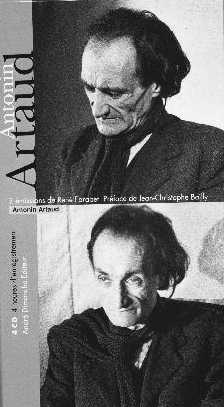
I had a conversation with Russell the other day about the failure of language. We were discussing Artaud’s theories and proclamations about the inherent evil of language. Art, then, seems to be the answer to the Artaudian and post-structuralist view. After all of this, and the realization that we were getting nowhere and had to return to work to toil away the precious hours of our lives, I finished reading Lenz. When I started this story I was immediately struck by the Romantic era writing. Having just read Artaud and Sarah Kane’s 4.48 Psychosis I was not wholly prepared to encounter a “traditional” approach. Yet, here was Buchner painting beautiful landscapes of the German and Switzerland border. Here was Buchner getting lost in the description of nature. Here was Buchner celebrating the natural world and the author’s ability to capture it. As I was reading I could picture such famous Romanticism works as Caspar David Friedrich’s “Wanderer Above the Sea of Fog.” I was not impressed. The modernist in my head kept screaming, “Make it new!” Then Lenz went crazy and everything changed. Suddenly, Buchner heard Ezra Pound and Artaud from generations yet to come and made it new. As Lenz drifts into insanity, the structure of the story changes; we leave the Romanticism behind and seem to speed toward Expressionism.


Lenz, save for a few areas, cannot easily be expressed as literature. The feel and makeup of this piece lends itself to art. If the first half of this story finds itself in comparison to Friedrich, then the latter half finds itself a precursor to the works of Edvard Munch. Two paintings jumped to my mind as I read the latter part of Lenz. The first was “The Scream.” I pictured that famous painting when I read, “something was stirring and swarming toward an abyss toward which he was being swept by an inexorable force” (47). The anxiety and uncertainty of this line captures what Munch would express in painting nearly 60 years later. This line, along with countless others, expresses so unequivocally what Artaud would write some 80 years later. Artaud’s words fail him; his terms are never defined, for each word is reliant on the previous…until what? Until there is a final word? The finite and finality in this supposed word is what drives people like Artaud and Lenz (both fictional and non) to insanity. The inability of this supposed final word is what drives others to art.


The other painting by Munch that leaped to mind whilst reading of Lenz’s exploits into the abyss was “The Sick Child.” The scene in this painting and the scene in which Munch paints are very similar, so similar in fact that it could probably be argued that Munch had read Lenz.

“The child seemed so forsaken and he himself so alone and isolated; he threw himself on the corpse; death terrified him, raw pain shot through him, these features, this quiet face were soon to rot away, he fell to his knees, he prayed with the full misery of despair that God…” (53)


With this image in my head I find myself wondering if language is all that inadequate. Clearly it is, it’s been proven since Plato’s Phaedrus, yet here we have a writer so clearly and beautifully transcribing a scene that only later manifests itself into art. Perhaps the main theme in Lenz can be understood that we experience the world visually, that the sane mind takes in the world, admires its beauty and its colors. The insane mind takes in the feel, he can see the pain, he can see the failure. Perhaps Lenz is one of the only written works that is both prose and painting. It is only through this amalgamation that meaning can begin to surface.

Monday, January 12, 2009

An Abyss That Laughs at Creation

Reading through Sarah Kane’s 4.48 Psychosis I was slightly worried that I’d have nothing remotely insightful to say. The piece is amazing. I’ve not read anything from Sarah Kane prior to this, and I see why she is so celebrated. This is a terrifying “play” that I’m sure most people can relate to, if only on a visceral level. I was reading and thinking to myself that this is the most tragic, honest, and brilliant thing I’ve read in quite some time. But, really, what am I to say about it? Sure, I could explore the “play’s” lack of character identification, its ambiguity, and its certainty. I could write that never before have I read a more poetic and tragic suicide note. But, I wasn’t sold on all of these. And, clearly, they don’t take up enough page space. Then, something wonderful happened, I turned to page 31: “the chicken’s still dancing / the chicken won’t stop.” I read these lines and instantly stopped. In the midst of a piece that seemed self-contained, self-reliant, self-actualized appeared a reference. Sarah Kane is referencing 1977 German film Stroszek. At the end of Werner Herzog’s masterpiece is a dancing chicken. The eponymous main character has stumbled—after many hardships and tragic defeats—onto a roadside attraction in the backwoods of some desolate American town. Within this roadside attraction are a series of performing animals. There is a duck playing a drum, a rabbit on a fire truck, and the dancing chicken in question. While the camera is focused on the chicken a faint gunshot is heard—this is presumably Stroszek’s suicide. The film ends with the chicken dancing, forever dancing.

It was at that point in the “play” that the character’s suicide was cemented. No longer was it in question, no longer could it be misconstrued. This reference to the dancing chicken carries into my poor attempt to be Alex Ross. Last entry I spoke of Interpol’s clarification of Artaud, and here, with Sarah Kane, again I find reference and clarity within popular music. The chicken as death is now threefold. The first was Stroszek’s death. The second was Ian Curtis, the lead singer of Joy Division. Before Ian Curtis killed himself he reportedly watched the film Stroszek. Now, Herzog has the blood of Sarah Kane on his hands. What is it about the film that so connects it to death? I think I might be piecing that together. Using the motif of this course, the acting out of the everyday, and my experience with Artaud’s "cry of life," I can see these three events as players in the rapidly dissolving line between art and life. All three of these people—including the fictitious Storszek—are bound to their arts. They all hear the cry of life and ask themselves, “why lie?” There is clearly a danger presenting itself in this theory; this attempt to not merely observe art, but to experience it.

If Artaud’s “cry of life” summed up my initial response and excursion into this, perhaps the following quote from Sarah Kane sums up my feelings for this burgeoning theory in my head:


“the only thing that’s permanent is destruction
we’re all going to disappear
trying to leave a mark more permanent than myself

I’ve not killed myself before so don’t look for precedents
What came before was just the beginning”

The feel and look of 4.48 Psychosis has more in common with a poem than that of a play. Again, this ties back to Artaud and the blurring of the artistic fields. The poetic nature and theme of this “play” reminds me of a poem by Mina Loy:

There is no Life or Death,
Only activity
And in the absolute
Is no declivity.
There is no Love or Lust
Only propensity
Who would possess
Is a nonentity.
There is no First or Last
Only equality
And who would rule
Joins the majority.
There is no Space or Time
Only intensity,
And tame things
Have no immensity


Herzog's Dancing Chicken


Artaud's Cry of Life


I’m not one for “profound thoughts of mind,” as Beckett would say; but, I am one to steal lyrics from popular musical acts like Interpol. The theme of this class, as appears to be the theme of Artaud, is to explore and expose theatre. What is theater, and maybe more importantly, why does it matter? As I was driving home from class one undated and mostly forgotten day, Interpol was playing on my iPod. It’s a song that I know very well, so well that it doesn’t affect me; it doesn’t even register in my head as it plays. However, the lyrics “in a passion it broke / I pull the black from the gray / but the soul remains” stood out. I was reflecting on Artaud’s letters and his purpose (too strong a word). It struck me that Artaud was attempting to pull the black from the gray (or maybe the white) to expose us to the soul of theater.


Artaud’s letters center around his desire to get published. He is committing literary faux pas by seemingly harassing an editor who did not publish his work. Artaud, however, asserts that he does not care about his poems being published; instead his aim is to be made to exist. Like every writer, Artaud is writing for posterity. What separates Artaud from the pack is Artaud feels he cannot exist, he may not exist, if he is not captured in some permanent manner.


“I nevertheless offer [these poems] to existence. I have felt and accepted these phrases, these ungainly expressions which you criticize…They come from the deep uncertainty of my thinking. Fortunate indeed when this uncertainty is not replaced by the absolute inexistence from which I sometimes suffer.”


When the publisher finally realizes that Artaud is not just advocating himself (though that is his chief aim), but a new way of seeing (Artaud as Rimbaud’s Seer), he offers to publish the letters they’ve exchanged. The publisher suggests publishing them as works of fiction, or at least changing their names. To this Artaud writes, “why lie, why try to place on a literary level a thing which is the very cry of life?” This brings me back around to the Interpol song. Artaud’s goal—as I’ve already presumptuously titled it—is to expose drama to life. He is attempting to pull the black (sometimes white) from the gray and show that in doing so the soul remains. That art, drama, poetry, all of it is experienced on such a level that we lie to ourselves and classify what we’ve witnessed as literary. Perhaps it’s not literary; perhaps it’s just the cry of life.


To further stretch the already fully stretched, this Artaudian decree of why lie, why mask the cry of life, can be traced beyond just the works of Artaud or the others studied in this class. It seems to me that the Beat generation embodied this notion as well. Writers like Jack Kerouac and his ilk were less concerned with the literary value of their works and more concerned with exposing the very cry of life.